
Product Innovation Management   23-slide PPT PowerPoint presentation slide deck (PPT)
$29.00

Product Innovation Management (23-slide PPT PowerPoint presentation slide deck (PPT)) Preview Image
Log in to unlock full preview.
Product Innovation Management (23-slide PPT PowerPoint presentation slide deck (PPT)) Preview Image
Arrow   Click main image to view in full screen.

Product Innovation Management (PowerPoint PPT Slide Deck)

PowerPoint (PPT) 23 Slides FlevyPro Document

Top 1,000 Best Practice $29.00
FlevyPro price: FREE (included in subscription)
This framework is developed by a team of former McKinsey and Big 4 consultants. The presentation follows the headline-body-bumper slide format used by global consulting firms.
Add to Cart


Immediate download
Free lifetime updates

INNOVATION MANAGEMENT PPT DESCRIPTION

Editor Summary Product Innovation Management is a 23-slide PowerPoint (PPT) framework by LearnPPT Consulting that defines a structured Innovation Management approach and tools for prioritizing and organizing product innovation. Read more

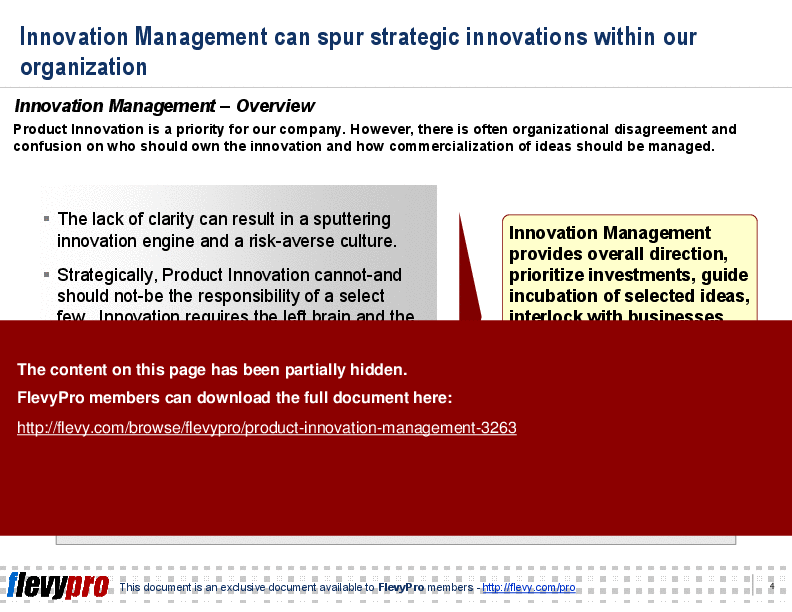
Product Innovation has become everyone's responsibility. But, when everybody owns innovation, nobody owns innovation.

Strategically, Product Innovation now calls for Innovation Management to minimize duplication and confusion. Innovation Management provides clarity and delineation on accountability (authority) versus responsibility (stake) by providing direction and prioritizing investments.

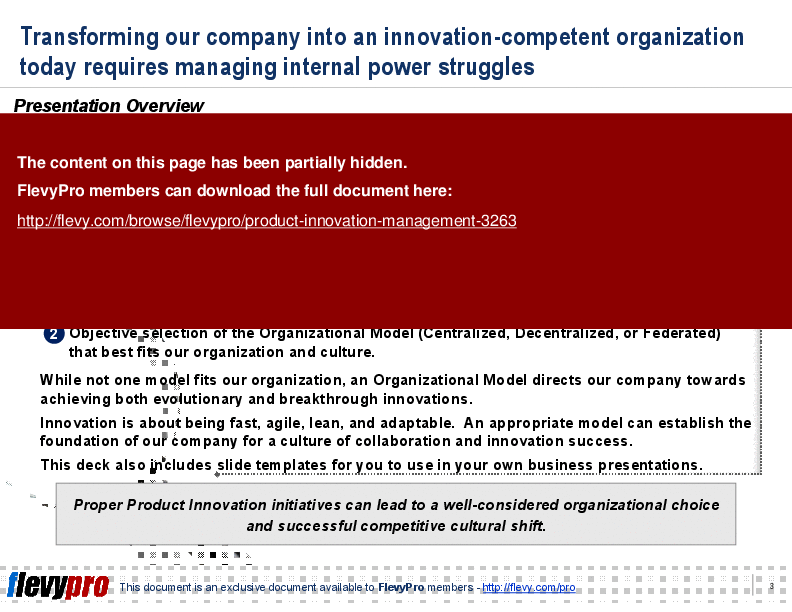
Building an innovation-competent organization required the application of fundamental approaches to achieve evolutionary innovation:

1. Application of Innovation Ambition Matrix as a powerful collaboration framework. This will help our company decide how to analyze different growth initiatives.

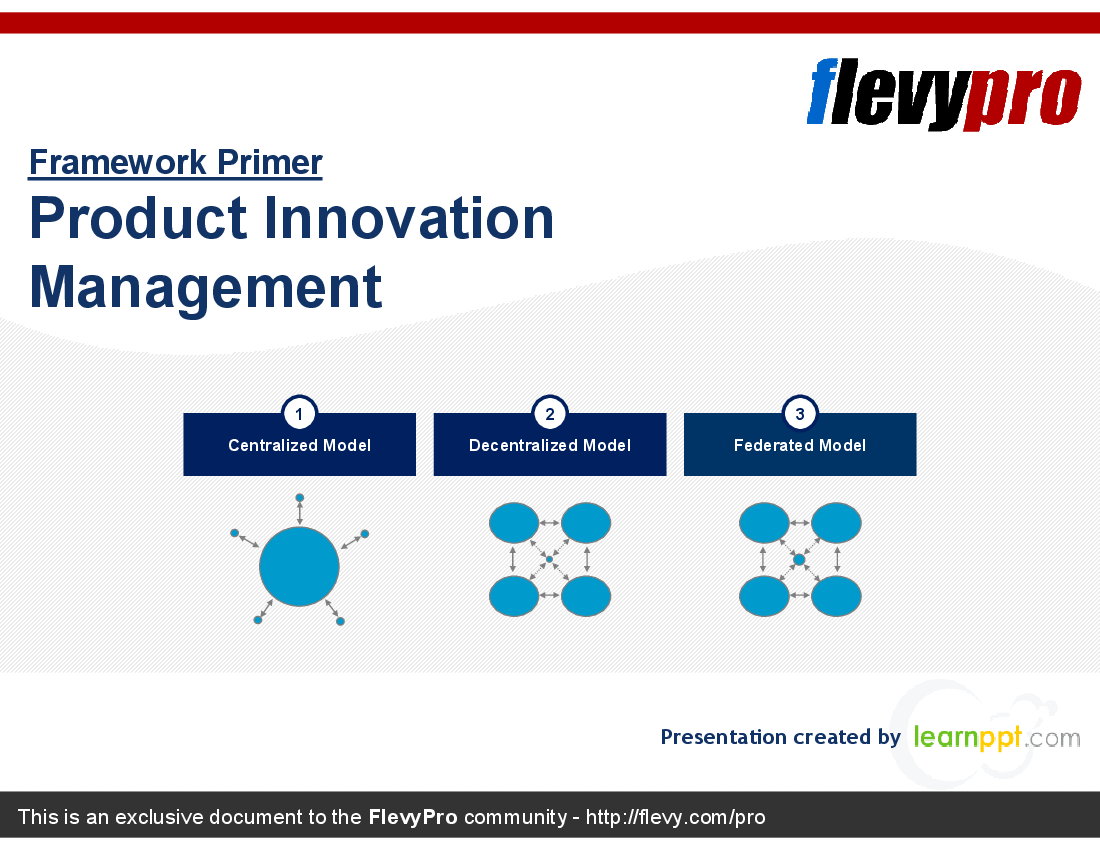
2. Objective selection of the Organizational Model (Centralized, Decentralized, or Federated) that best fits our organization and culture.

While not one model fits our organization, an Organizational Model directs our company towards achieving both evolutionary and breakthrough innovations.

Innovation is about being fast, agile, lean, and adaptable. An appropriate model can establish the foundation of our company for a culture of collaboration and innovation success. Proper Product Innovation initiatives can lead to a well-considered organizational choice and successful competitive cultural shift.

This deck also includes slide templates for you to use in your own business presentations.

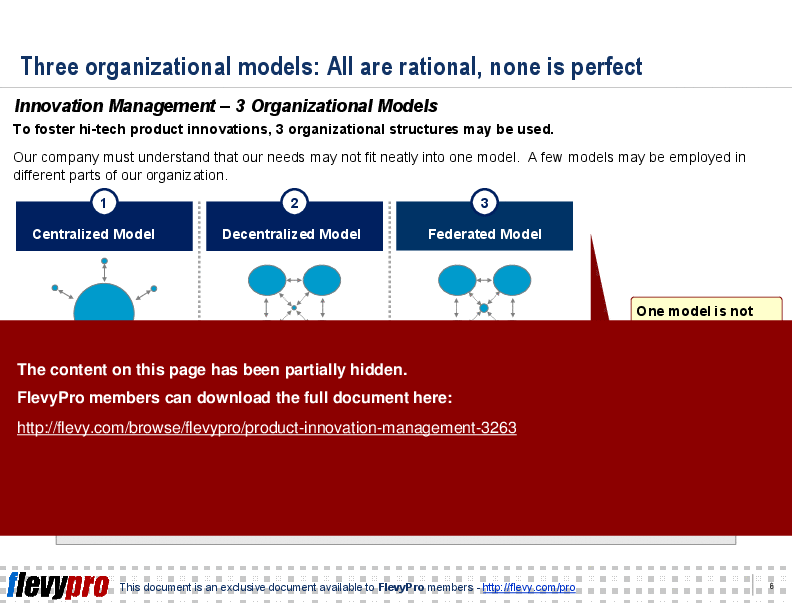
This presentation dives deep into the intricacies of Innovation Management, offering a comprehensive analysis of three distinct organizational models: Centralized, Decentralized, and Federated. Each model is dissected to reveal its unique advantages and potential pitfalls, providing actionable insights into how they can be leveraged to foster innovation within your organization. The PPT emphasizes the importance of selecting the right model based on your company's specific needs and culture, ensuring that innovation efforts are not only effective, but also sustainable in the long term.

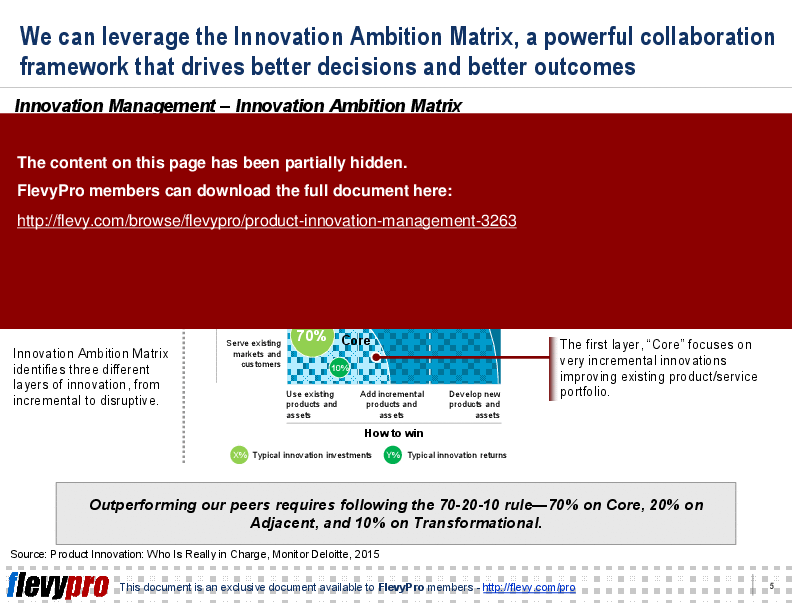
The Innovation Ambition Matrix is another key feature of this deck, serving as a robust framework for categorizing and prioritizing innovation initiatives. By applying the 70-20-10 rule, your organization can strategically allocate resources to core, adjacent, and transformational innovations, driving growth and maintaining a competitive edge. This presentation is an invaluable resource for executives looking to implement a structured approach to innovation, complete with slide templates to facilitate internal presentations and discussions.

Got a question about this document? Email us at flevypro@flevy.com.

MARCUS OVERVIEW

This synopsis was written by Marcus [?] based on the analysis of the full 23-slide presentation.


Executive Summary
The Product Innovation Management presentation provides a strategic framework for organizations aiming to enhance their innovation capabilities. It emphasizes the necessity of structured Innovation Management to clarify roles and responsibilities, thereby minimizing confusion and duplication in innovation efforts. The presentation introduces the Innovation Ambition Matrix, a vital tool for prioritizing growth initiatives, and outlines 3 organizational models—Centralized, Decentralized, and Federated—each tailored to different corporate cultures and innovation needs. By leveraging these insights, executives can foster a culture of innovation that aligns with their strategic objectives.

Who This Is For and When to Use
•  Corporate executives responsible for driving innovation strategies
•  Product managers seeking to align innovation efforts with business goals
•  Innovation teams looking to implement structured frameworks
•  Consultants advising organizations on innovation management practices

Best-fit moments to use this deck:
•  During strategic planning sessions focused on innovation initiatives
•  When assessing and selecting an appropriate organizational model for innovation
•  In workshops aimed at aligning cross-functional teams on innovation strategies

Learning Objectives
•  Define the role of Innovation Management in fostering a culture of innovation
•  Build a tailored Innovation Management framework that aligns with organizational goals
•  Establish the Innovation Ambition Matrix to prioritize innovation investments
•  Identify the most suitable organizational model for innovation management
•  Create actionable templates for implementing innovation strategies
•  Foster collaboration across business units to enhance innovation outcomes

Table of Contents
•  Overview (page 1)
•  Innovation Management (page 3)
•  Innovation Management Organizational Models (page 6)
•  Organizational Model Selection (page 14)
•  Templates (page 18)

Primary Topics Covered
•  Innovation Management Overview - Innovation Management provides direction and prioritizes investments, ensuring alignment with strategic objectives.
•  Innovation Ambition Matrix - A framework that categorizes innovation efforts into Core, Adjacent, and Transformational initiatives to guide funding decisions.
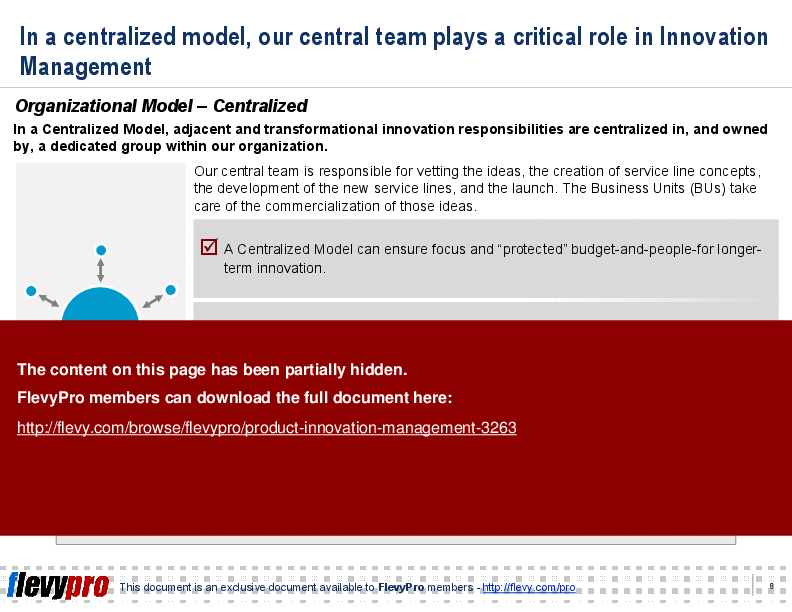
•  Centralized Model - A structure where innovation responsibilities are centralized, ensuring focus and resource allocation for long-term innovation.
•  Decentralized Model - A model where innovation responsibilities are distributed across business units, promoting ownership and minimizing hand-offs.
•  Federated Model - Combines elements of both centralized and decentralized models, embedding central team members within business units for enhanced collaboration.
•  Organizational Model Selection - A strategic assessment process to determine the most suitable model based on industry disruption and organizational culture.

Deliverables, Templates, and Tools
•  Innovation Ambition Matrix template for categorizing innovation initiatives
•  Centralized Model framework for structured innovation management
•  Decentralized Model framework to promote inter-business unit collaboration
•  Federated Model framework for hybrid innovation management
•  Organizational Model Selection checklist to guide decision-making
•  Slide templates for presenting innovation strategies and frameworks

Slide Highlights
•  Overview of the Innovation Management framework emphasizing clarity in roles
•  Visual representation of the Innovation Ambition Matrix illustrating investment allocation
•  Comparison of the 3 organizational models with their respective advantages and challenges
•  Radar chart depicting innovation attributes across different organizational models
•  Strategic questions for assessing the right organizational model for innovation

Potential Workshop Agenda
Innovation Management Overview Session (60 minutes)
•  Discuss the importance of structured Innovation Management
•  Review the Innovation Ambition Matrix and its application
•  Identify key roles and responsibilities in innovation

Organizational Model Selection Workshop (90 minutes)
•  Assess current organizational culture and disruption levels
•  Evaluate the pros and cons of each organizational model
•  Develop a tailored model selection strategy

Template Development Session (60 minutes)
•  Create actionable templates for innovation initiatives
•  Align templates with organizational goals and strategies
•  Discuss implementation plans for the selected organizational model

Customization Guidance
•  Adapt the Innovation Ambition Matrix to reflect specific market conditions and organizational goals
•  Modify organizational model frameworks to suit unique company cultures and structures
•  Tailor templates to incorporate relevant metrics and performance indicators for innovation success

Secondary Topics Covered
•  The role of leadership in driving innovation initiatives
•  Best practices for fostering a collaborative innovation culture
•  Strategies for overcoming resistance to innovation within organizations
•  Case studies illustrating successful implementation of innovation frameworks

Topic FAQ

What are the main organizational models for managing product innovation?

Innovation management typically uses 3 models: Centralized (dedicated central team and resources), Decentralized (innovation owned by business units), and Federated (hybrid with central members embedded in BUs). Each model balances focus, ownership, and collaboration differently; the framework discusses all 3 organizational models in detail and provides frameworks for each.

How does the Innovation Ambition Matrix help prioritize initiatives?

The Innovation Ambition Matrix categorizes initiatives into Core, Adjacent, and Transformational buckets to guide resource allocation and focus. It helps teams decide how much to invest across horizons, often operationalized using a 70-20-10 allocation between core, adjacent, and transformational work, and is presented as a working template.

What factors should I evaluate when choosing an innovation organizational model?

Key factors include industry disruption level, market demand for co-development, cultural collaboration tendencies, ease of commercialization, end-to-end ownership, and ability to prioritize transformational ideas. The deck ties these attributes to a structured Organizational Model Selection checklist to guide the decision-making process.

What should I look for when buying an innovation management toolkit for internal use?

Look for a clear prioritization framework (e.g., Innovation Ambition Matrix), model descriptions for Centralized/Decentralized/Federated approaches, an organizational model selection checklist, and ready-to-use slide templates in PPT format to support workshops and executive briefings; the Product Innovation Management deck includes these elements.

We just completed a merger—which innovation model should we consider first for post-merger integration?

Choice depends on cultural fit and disruption exposure; a Federated Model is often useful post-merger because it embeds central team members within business units to improve collaboration and reduce hand-offs. The presentation outlines how the Federated Model supports cross-unit collaboration and recommends assessing culture and commercialization ease.

How do I implement clear decision rights for innovation initiatives across business units?

Establish aligned leadership roles, define authority versus responsibility, and set explicit decision rights tied to the chosen operating model. The deck recommends using the Organizational Model Selection checklist and aligning resources, incentives, and roles to the selected model to operationalize decision rights and accountability.

Are slide templates and checklists worth purchasing for running innovation workshops?

Slide templates and checklists speed alignment and ensure consistent messaging during workshops; look for ready-made Innovation Ambition Matrix templates, model frameworks for Centralized/Decentralized/Federated approaches, and a model selection checklist to shorten prep time and standardize outcomes using those templates.

What common risks occur with a decentralized innovation model and how are they described?

Decentralized models can encourage ownership, but also risk short-term orientation by business unit leaders, risk-averse behavior, and Not-Invented-Here (NIH) resistance to external ideas. The presentation highlights these challenges and contrasts them with trade-offs across the 3 models to inform selection and mitigation planning.

Document FAQ
These are questions addressed within this presentation.

What is the Innovation Ambition Matrix?
The Innovation Ambition Matrix is a framework that categorizes innovation efforts into 3 layers: Core, Adjacent, and Transformational, guiding organizations on how to allocate resources effectively.

How do I choose the right organizational model for innovation?
Consider factors such as industry disruption, market demand for co-development, and the collaborative nature of your organizational culture to determine the most suitable model.

What are the benefits of a Centralized Model?
A Centralized Model ensures focused innovation efforts and dedicated resources, which can lead to sustained commercial success.

What challenges might arise with a Decentralized Model?
A Decentralized Model may lead to risk-averse behavior if business unit leaders prioritize short-term metrics over long-term innovation goals.

How can the Federated Model enhance innovation?
The Federated Model fosters collaboration by embedding central team members within business units, facilitating better communication and idea sharing.

What are the key attributes to consider when selecting an organizational model?
Focus on attributes such as ease of commercialization, end-to-end ownership, and the ability to prioritize transformational ideas.

How can I implement the selected organizational model effectively?
Start by aligning leadership roles, establishing clear decision rights, and ensuring that resources and incentives support the chosen model.

What templates are included in the presentation?
The presentation includes templates for the Innovation Ambition Matrix, Centralized, Decentralized, and Federated Models, as well as model selection checklists.

Glossary
•  Innovation Management - The process of overseeing and directing innovation efforts within an organization.
•  Innovation Ambition Matrix - A framework for categorizing innovation initiatives based on their scope and impact.
•  Centralized Model - An organizational structure where innovation responsibilities are concentrated in a dedicated team.
•  Decentralized Model - An organizational structure where innovation responsibilities are distributed across business units.
•  Federated Model - A hybrid organizational structure that combines elements of both centralized and decentralized models.
•  Organizational Model Selection - The process of determining the most appropriate model for managing innovation based on various factors.
•  Core Innovation - Incremental improvements to existing products or services.
•  Adjacent Innovation - Modifications to existing products aimed at new customer segments.
•  Transformational Innovation - Development of entirely new products or services for new markets.
•  Collaboration - Working together across teams or units to achieve common goals.
•  Cultural Fit - The alignment of an organizational model with the existing culture of the company.
•  Decision Rights - The authority to make decisions regarding innovation initiatives.
•  Resource Allocation - The distribution of resources to support innovation efforts.
•  Market Demand - The need or desire for products or services in a specific market.
•  Risk Aversion - The tendency to avoid taking risks in favor of more certain outcomes.
•  Innovation Attributes - Characteristics that define the effectiveness of an organizational model in fostering innovation.
•  Business Units (BUs) - Divisions within an organization responsible for specific functions or products.
•  NIH Syndrome - "Not Invented Here" syndrome, where teams resist ideas or products developed outside their own unit.
•  Stakeholder Engagement - Involving relevant parties in the innovation process to ensure buy-in and support.
•  Change Management - The approach to transitioning individuals, teams, and organizations to a desired future state.

INNOVATION MANAGEMENT PPT SLIDES

Organizational Models for Effective Innovation Management

Decentralized Innovation Model: Benefits and Risks

Attributes of Organizational Models for Innovation

Framework for Selecting Organizational Models

Centralized Innovation Management: Roles and Challenges

Source: Best Practices in Innovation, Product Strategy PowerPoint Slides: Product Innovation Management PowerPoint (PPT) Presentation Slide Deck, LearnPPT Consulting


$29.00
FlevyPro price: FREE (included in subscription)
This framework is developed by a team of former McKinsey and Big 4 consultants. The presentation follows the headline-body-bumper slide format used by global consulting firms.
Add to Cart
  

Did you need more documents?

Consider a FlevyPro subscription from $39/month. View plans here.

For $10.00 more, you can download this document plus 2 more FlevyPro documents. That's just $13 each.

ABOUT FLEVYPRO

This document is part of the FlevyPro Library, a curated knowledge base of documents for our FlevyPro subscribers.

FlevyPro is a subscription service for on-demand business frameworks and analysis tools. FlevyPro subscribers receive access to an exclusive library of curated business documents—business framework primers, presentation templates, Lean Six Sigma tools, and more—among other exclusive benefits.

Click here to learn more about FlevyPro and its benefits.

Did you know?
The average daily rate of a McKinsey consultant is $6,625 (not including expenses). The average price of a Flevy document is $65.
Bundle and save! You can save up to % with bundles!

View bundle(s)


Trusted by over 10,000+ Client Organizations
Since 2012, we have provided business templates to over 10,000 businesses and organizations of all sizes, from startups and small businesses to the Fortune 100, in over 130 countries.
AT&T GE Cisco Intel IBM Coke Dell Toyota HP Nike Samsung Microsoft Astrazeneca JP Morgan KPMG Walgreens Walmart 3M Kaiser Oracle SAP Google E&Y Volvo Bosch Merck Fedex Shell Amgen Eli Lilly Roche AIG Abbott Amazon PwC T-Mobile Broadcom Bayer Pearson Titleist ConEd Pfizer NTT Data Schwab


Read Customer Testimonials

 
"FlevyPro has been a brilliant resource for me, as an independent growth consultant, to access a vast knowledge bank of presentations to support my work with clients. In terms of RoI, the value I received from the very first presentation I downloaded paid for my subscription many times over! The "

– Roderick Cameron, Founding Partner at SGFE Ltd
 
"Flevy is now a part of my business routine. I visit Flevy at least 3 times each month.

Flevy has become my preferred learning source, because what it provides is practical, current, and useful in this era where the business world is being rewritten.

In today's environment where there are so "

– Omar Hernán Montes Parra, CEO at Quantum SFE
 
"As a consulting firm, we had been creating subject matter training materials for our people and found the excellent materials on Flevy, which saved us 100's of hours of re-creating what already exists on the Flevy materials we purchased."

– Michael Evans, Managing Director at Newport LLC
 
"As a niche strategic consulting firm, Flevy and FlevyPro frameworks and documents are an on-going reference to help us structure our findings and recommendations to our clients as well as improve their clarity, strength, and visual power. For us, it is an invaluable resource to increase our impact and value."

– David Coloma, Consulting Area Manager at Cynertia Consulting
 
"One of the great discoveries that I have made for my business is the Flevy library of training materials.

As a Lean Transformation Expert, I am always making presentations to clients on a variety of topics: Training, Transformation, Total Productive Maintenance, Culture, Coaching, Tools, Leadership Behavior, etc. Flevy "

– Ed Kemmerling, Senior Lean Transformation Expert at PMG
 
"My FlevyPro subscription provides me with the most popular frameworks and decks in demand in today’s market. They not only augment my existing consulting and coaching offerings and delivery, but also keep me abreast of the latest trends, inspire new products and service offerings for my practice, and educate me "

– Bill Branson, Founder at Strategic Business Architects
 
"Last Sunday morning, I was diligently working on an important presentation for a client and found myself in need of additional content and suitable templates for various types of graphics. Flevy.com proved to be a treasure trove for both content and design at a reasonable price, considering the time I "

– M. E., Chief Commercial Officer, International Logistics Service Provider
 
"As a consultant requiring up to date and professional material that will be of value and use to my clients, I find Flevy a very reliable resource.

The variety and quality of material available through Flevy offers a very useful and commanding source for information. Using Flevy saves me time, enhances my expertise and ends up being a good decision."

– Dennis Gershowitz, Principal at DG Associates


Save with Bundles

This document is available as part of the following discounted bundle(s):

Save %!
Product Innovation Frameworks

This bundle contains 3 total documents. See all the documents to the right.

$49.00


Add Bundle & Save


Customers Also Bought These Documents


Customers Also Like These Documents

Explore Templates on Related Management Topics


Your Recently Viewed Documents
Download our FREE Strategy & Transformation Framework Templates

Download our free compilation of 50+ Strategy & Transformation slides and templates. Frameworks include McKinsey 7-S, Balanced Scorecard, Disruptive Innovation, BCG Curve, and many more.